manual vs electric standing desk
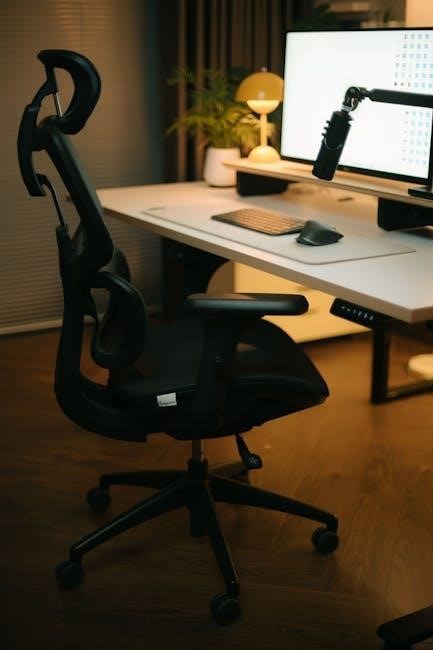
Standing desks are gaining traction, offering health benefits by reducing sedentary work time. This guide compares manual and electric models, exploring features and user experience.
The Rising Popularity of Standing Desks
Standing desks have experienced a significant surge in popularity, driven by growing awareness of the detrimental health effects associated with prolonged sitting. Modern workplaces and home offices are increasingly adopting these ergonomic solutions. This shift isn’t merely a trend; it’s a response to research highlighting the benefits of reducing sedentary behavior.
Initially, converter desks – placed atop existing setups – led the charge, offering a simple entry point. However, dedicated manual and electric standing desks have gained prominence. The demand is fueled by a desire for improved posture, increased energy levels, and potential long-term health gains. Consumers are actively seeking alternatives to traditional workstations, and standing desks are positioned as a key component of a healthier lifestyle.
Health Benefits of Standing While Working
Standing while working offers numerous physiological advantages over prolonged sitting. Studies demonstrate a correlation between reduced sedentary time and improved cardiovascular health, lowering the risk of heart disease. Standing can also contribute to increased calorie expenditure, aiding in weight management and combating metabolic slowdown.
Furthermore, adopting a standing posture encourages better posture, potentially alleviating back and neck pain. Increased blood flow to the brain can enhance cognitive function and boost energy levels. Both manual and electric standing desks facilitate this transition, though ease of adjustment impacts consistency. Regularly alternating between sitting and standing – facilitated by these desks – maximizes these benefits, promoting overall well-being and productivity.

Manual Standing Desks: A Detailed Look
Manual standing desks utilize a hand-crank or similar mechanism to adjust height, offering an affordable entry point into standing desk technology and portability.
Mechanism and Operation of Manual Desks
Manual standing desks primarily rely on a mechanical lifting system. Most commonly, this involves a hand crank connected to a scissor lift or similar framework. Rotating the crank initiates a gear system, gradually raising or lowering the desk surface. Some models utilize a spring-assisted lift, reducing the physical effort required, though still demanding manual input.
Operation is straightforward: the user simply turns the crank until the desired height is achieved. Unlike electric desks, there’s no reliance on a power source, offering placement flexibility. However, adjustments are slower and require physical exertion. The frame is not bound by electrical sockets, making it easy to move. The efficiency compared to electric-resistance systems is notable, operating effectively without electricity.
Pros of Manual Standing Desks
Manual standing desks offer several advantages, primarily centered around affordability and simplicity. Their initial investment cost is significantly lower than electric counterparts, making them accessible to budget-conscious users. The absence of electrical components translates to increased reliability and reduced risk of malfunctions. There’s no need to worry about power outages or electrical safety concerns.
Furthermore, manual desks boast greater portability, as they aren’t tethered to power outlets. This flexibility is ideal for dynamic workspaces. They also promote a more mindful adjustment process; users are less likely to impulsively change height, encouraging deliberate ergonomic positioning. The straightforward mechanism minimizes potential repair needs, contributing to long-term cost savings.
Cons of Manual Standing Desks
Manual standing desks, while affordable, present certain drawbacks. The primary disadvantage is the effort required for height adjustment. Utilizing a crank or lever system can be physically demanding, especially for frequent transitions between sitting and standing. This can discourage regular adjustments, negating some ergonomic benefits.

Adjustment speed is considerably slower compared to electric desks, disrupting workflow. Achieving precise height settings can also be challenging, potentially leading to suboptimal posture. Larger or heavier desktops may exacerbate the difficulty of manual operation. The physical exertion involved isn’t suitable for all users, particularly those with limited strength or mobility. Ultimately, convenience is sacrificed for cost savings.

Electric Standing Desks: A Comprehensive Overview
Electric standing desks utilize motors for effortless height adjustments. They offer features like programmable presets and smooth operation, enhancing user convenience and ergonomic benefits.
Dual Motor vs. Single Motor Electric Desks
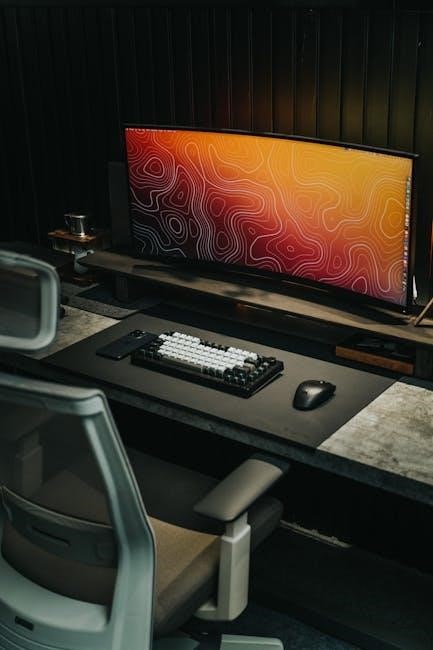
Electric standing desks come in two primary motor configurations: single and dual motor systems. Single motor desks are generally more affordable, suitable for lighter loads and occasional use. However, they may exhibit slight instability at higher elevations or with heavier items placed on the desk surface.
Dual motor desks, like those from Eureka and FlexiSpot, distribute the workload across two motors, providing superior stability, faster adjustment speeds, and increased lifting capacity. This makes them ideal for users who frequently change positions or require a robust desk for multiple monitors and equipment. Comparison tables highlight the advantages of dual motors, demonstrating their efficiency and reliability compared to single-motor counterparts.
Ultimately, the choice depends on individual needs and budget, but dual motors offer a more premium and dependable experience.
Features and Functionality of Electric Desks
Electric standing desks boast a range of features enhancing usability and convenience. Programmable height presets allow users to save preferred positions for quick adjustments throughout the day, promoting dynamic work habits. Many models, such as the Vari Essential Electric, include user-friendly controls and digital displays for precise height selection.
Advanced features extend to anti-collision systems, which detect obstacles during movement, preventing damage to the desk or surrounding objects. Some desks, like those reviewed from FEZIBO, incorporate built-in drawers and shelving for enhanced organization. Comprehensive user manuals detail operation and maintenance, ensuring optimal performance.
These desks often prioritize ease of assembly and intuitive functionality, catering to a broad range of users.
Pros of Electric Standing Desks
Electric standing desks offer significant advantages in convenience and ease of use. The primary benefit is effortless height adjustment – a simple press of a button allows for seamless transitions between sitting and standing positions. Programmable presets further streamline this process, catering to individual ergonomic needs.
Features like anti-collision technology enhance safety, preventing accidental damage. Dual-motor systems, as seen in FlexiSpot models, provide greater stability and lifting capacity compared to single-motor options. The user-friendly controls and digital displays contribute to a superior user experience.
Ultimately, electric desks promote a more dynamic and comfortable work environment, encouraging frequent position changes.
Cons of Electric Standing Desks
Electric standing desks, while convenient, present several drawbacks. The most significant is the higher initial cost compared to manual alternatives. Dependence on a power source limits placement options, requiring proximity to an electrical outlet. Potential electrical malfunctions pose a safety risk, necessitating careful adherence to safety instructions – avoiding contact with voltage is crucial.
Repairs can be complex and expensive, potentially requiring professional assistance. Single-motor models may exhibit instability under heavier loads. Furthermore, the electronic components contribute to a larger carbon footprint. Steelcase emphasizes the importance of following instructions for manual reset in case of power issues.

Safety Considerations for Both Types
Both desk types require mindful use; electric desks demand electrical safety precautions, while manual desks need careful operation to avoid pinch points and injuries.
Electrical Safety with Electric Standing Desks
Electric standing desks present unique safety concerns due to their powered components. Always ensure the desk is properly grounded and connected to a surge protector to prevent electrical hazards. Avoid contact with exposed wiring and never operate the desk with a damaged power cord.
Manufacturers, like Steelcase, emphasize following provided instructions for safe operation, including manual reset procedures in case of power failure. It’s crucial to avoid placing the desk near water sources and to regularly inspect all electrical connections. Failure to adhere to these guidelines can result in electric shock, fire, or short circuits. Prioritize safety by understanding the desk’s electrical system and following all recommended precautions.
Proper Usage and Maintenance
Consistent, correct usage extends the lifespan of any standing desk. Avoid exceeding the desk’s weight capacity, as this can strain the mechanism – especially crucial for manual desks. Regularly inspect all components, tightening screws and bolts as needed. For electric desks, keep the motor area clear of obstructions and dust.
FlexiSpot provides comprehensive manuals detailing operation and upkeep. Manual desks benefit from occasional lubrication of moving parts. Electric desks should have cords checked for damage. Proper cable management prevents tripping hazards and protects wiring. Following these simple maintenance steps ensures smooth operation and prevents costly repairs, maximizing your investment in a healthier workspace.

Cost Comparison: Manual vs. Electric
Manual desks generally have a lower initial cost, but electric models, while pricier upfront, may offer better long-term value due to convenience and features.
Initial Investment Costs
Manual standing desks typically represent a more budget-friendly entry point into the world of standing workstations. Their simpler mechanics translate directly into lower manufacturing costs, and these savings are often passed on to the consumer. You can generally find a reliable manual standing desk frame for between $200 and $500, depending on the size, weight capacity, and build quality.
Conversely, electric standing desks command a higher initial price tag. The inclusion of motors, control panels, and more complex lifting mechanisms significantly increases production expenses. Expect to invest anywhere from $400 to over $1000 for a decent electric standing desk, with premium models featuring dual motors and advanced features easily exceeding the $1000 mark. The choice hinges on your budget and desired level of automation.

Long-Term Cost Considerations (Maintenance, Repairs)
Manual standing desks, boasting fewer moving parts, generally require less maintenance. Potential issues are typically limited to the crank mechanism or frame stability, often addressable with simple tightening or lubrication. Repair costs, should they arise, are usually minimal, involving replacement of a crank handle or similar component. Their simplicity contributes to a longer potential lifespan with proper care.
Electric standing desks, however, present a different scenario. Motors, control boxes, and wiring are susceptible to failure over time. Repairs can be significantly more expensive, potentially requiring professional servicing or component replacement. Electrical safety is also a consideration. While warranties often cover initial defects, out-of-warranty repairs can quickly offset the initial cost savings compared to a robust manual option. Regular inspection and careful use are crucial.

User Experience and Ergonomics
Electric desks offer effortless, precise height adjustments, promoting dynamic movement. Manual desks require physical effort, potentially disrupting workflow, but offer tactile control.
Ease of Adjustment and Use
Electric standing desks truly excel in user-friendliness. With the simple press of a button, users can smoothly transition between sitting and standing positions, often with programmable height presets for customized comfort. This ease of adjustment encourages frequent changes throughout the workday, maximizing ergonomic benefits.
Manual standing desks, conversely, require physical exertion to raise or lower the desk surface. Typically utilizing a crank mechanism, adjustments are slower and demand more effort. While this can be a minor inconvenience, it also means users might adjust their desk height less frequently. The simplicity of the manual system, however, eliminates reliance on electrical outlets and complex controls, offering a straightforward operational experience.
Ultimately, the preferred method hinges on individual preferences and priorities – convenience versus simplicity.
Impact on Posture and Comfort
Both manual and electric standing desks, when used correctly, can significantly improve posture and comfort compared to prolonged sitting. The ability to alternate positions reduces strain on the back, neck, and shoulders. However, the ease of adjustment plays a crucial role in realizing these benefits consistently.
Electric desks facilitate more frequent transitions, allowing users to quickly respond to discomfort and maintain optimal alignment. This responsiveness is key to preventing postural fatigue. Manual desks, requiring more effort for adjustments, might lead to users remaining in suboptimal positions for longer periods.
Proper ergonomic setup – monitor height, keyboard placement, and foot support – is paramount regardless of the desk type. Ultimately, a comfortable and supportive workspace encourages better posture and reduces the risk of musculoskeletal issues.

Choosing the Right Standing Desk for You
Selecting between a manual and electric standing desk hinges on individual needs and priorities. Consider your budget, workspace constraints, and desired level of convenience. Manual desks are ideal for those seeking a cost-effective solution and don’t require frequent height adjustments.
If seamless transitions and personalized ergonomic settings are crucial, an electric desk is the better investment. Dual-motor models offer greater stability and lifting capacity, beneficial for heavier setups. Assess your typical workflow – how often will you switch between sitting and standing?
Think about available power outlets and the desk’s overall footprint. Prioritize safety features and read user reviews before making a final decision. Ultimately, the “right” desk is the one that best supports your health and productivity.



Leave a Reply
You must be logged in to post a comment.