bowling ball weight guide
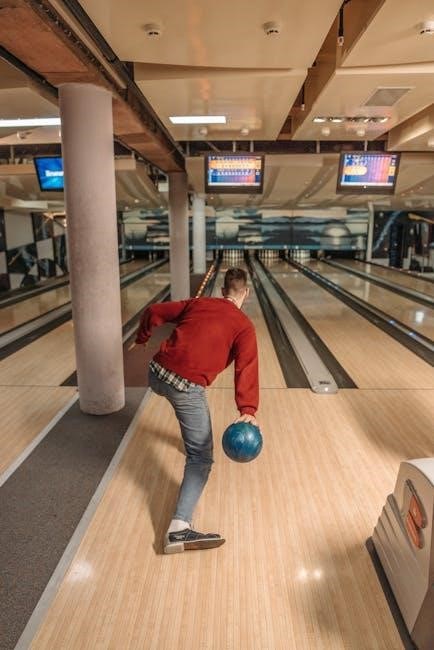
Bowling Ball Weight Guide: A Comprehensive Overview (Updated 12/11/2025)
Navigating bowling ball weight requires understanding USBC regulations, with 16 pounds being the legal maximum. Choosing the right weight, influenced by body weight and style,
is crucial for optimal performance and preventing injury.
Selecting the appropriate bowling ball weight is a foundational element of success and enjoyment in the sport. It’s far more nuanced than simply grabbing the heaviest ball available. The ideal weight isn’t a one-size-fits-all proposition; it’s a personalized choice dictated by a complex interplay of factors, including the bowler’s physical attributes, skill level, and preferred bowling style.
Understanding the significance of weight begins with recognizing the USBC (United States Bowling Congress) regulations. Currently, the maximum legal weight for a bowling ball is 16 pounds. This limit exists for safety and to maintain fairness within the sport. However, simply choosing a 16-pound ball isn’t necessarily the right approach. Many seasoned professional bowlers historically favored, and still often utilize, 16-pound bowling balls, maximizing their potential within the legal boundaries.
Beyond the legal maximum, the core principle revolves around achieving a balance between power and control. A ball that’s too heavy can lead to fatigue, reduced accuracy, and even injury. Conversely, a ball that’s too light may lack the necessary momentum to effectively impact the pins. Therefore, a thoughtful assessment of weight-to-body ratio and individual bowling mechanics is paramount; This guide will delve into these considerations, providing a comprehensive overview to help bowlers of all levels make informed decisions about their bowling ball weight.
II. USBC Regulations & Legal Limits
The United States Bowling Congress (USBC) establishes and enforces stringent regulations regarding bowling equipment, including ball weight, to ensure fair play and bowler safety. These rules are paramount for both recreational and competitive bowlers alike. Adherence to USBC specifications is mandatory in sanctioned leagues and tournaments.
The most critical regulation concerning weight is the absolute maximum limit: a bowling ball cannot exceed 16 pounds. This restriction isn’t arbitrary; it’s a safety measure designed to prevent injuries resulting from excessive force. The USBC continually monitors equipment advancements and adjusts regulations as needed to maintain a level playing field.
Beyond the maximum weight, USBC regulations also address other aspects of ball construction, such as surface texture and core dynamics. These specifications aim to prevent technological advantages that could unfairly influence scoring. Detailed information regarding approved ball specifications, including weight tolerances, can be found on the official USBC website. Bowlers are responsible for ensuring their equipment complies with these rules before participating in sanctioned events. Ignoring these regulations can lead to disqualification and penalties.

III. Maximum Bowling Ball Weight
The universally recognized maximum bowling ball weight, as dictated by the United States Bowling Congress (USBC), is definitively 16 pounds. This limit isn’t merely a suggestion; it’s a firm regulation enforced across all USBC-sanctioned events, from local leagues to professional tournaments. The rationale behind this restriction centers primarily on safety, aiming to mitigate the risk of injuries to bowlers and lane personnel.
While some individuals, particularly those with significant upper body strength, might desire a heavier ball, the USBC maintains the 16-pound cap to prevent excessive force that could lead to strains, sprains, or more serious musculoskeletal issues. It’s important to note that exceeding this weight limit renders a ball illegal for use in competitive play.

Historically, professional bowlers often favored heavier balls, with 16 pounds being a common choice. However, advancements in ball technology and a greater emphasis on technique have led to a wider range of weight preferences. Despite these shifts, the 16-pound maximum remains a constant, ensuring a standardized and safe environment for all bowlers.
IV. Understanding Weight-to-Body Ratio
The concept of weight-to-body ratio is paramount when selecting a bowling ball, extending beyond simply choosing the heaviest permissible weight. It’s about finding a balance that allows you to comfortably and effectively control the ball throughout your swing and release. A general guideline suggests a ratio ranging from 10% to 13% of your body weight, but this is merely a starting point.
For instance, a 180-pound bowler might initially consider a 16-pound ball (approximately 8.9% ratio), but could potentially benefit from a slightly heavier or lighter weight depending on their individual strength, technique, and style. Ignoring this ratio can lead to several issues, including difficulty maintaining a consistent swing, reduced accuracy, and increased risk of injury.

A ball that’s too heavy can strain muscles and joints, while one that’s too light may lack the necessary momentum to effectively impact the pins. Therefore, understanding your personal weight-to-body ratio is a crucial step towards optimizing your bowling performance and ensuring a safe and enjoyable experience.
V. General Guidelines Based on Body Weight
While individual factors are key, these guidelines offer a solid starting point for bowling ball weight selection based on body weight. Bowlers weighing under 100 pounds should generally begin with a 6-8 pound ball, focusing on developing proper form. Those between 100-120 pounds typically find success with an 8-10 pound ball, gradually increasing as strength improves.
For individuals weighing 120-140 pounds, a 10-12 pound ball is often recommended. As body weight increases to 140-160 pounds, a 12-14 pound ball becomes suitable. Bowlers between 160-180 pounds frequently opt for a 14-16 pound ball, recognizing the 16-pound limit. Above 180 pounds, many experienced bowlers gravitate towards the maximum 16-pound weight, but this isn’t universally applicable.
Remember, these are merely suggestions. Factors like bowling style, strength, and experience significantly influence the ideal weight. It’s crucial to prioritize comfort and control over simply choosing the heaviest ball possible. Experimentation within these ranges is encouraged to find what feels best for you.
VI. Beginner Bowlers: Starting Weight Recommendations

For novice bowlers, prioritizing control and developing proper technique is paramount, making a lighter ball the ideal starting point. Resist the urge to emulate experienced bowlers using heavier weights; focus on consistency first. A weight between 6 and 10 pounds is generally recommended for beginners, depending on age and physical strength.
Children and individuals with less upper body strength should begin with a 6-8 pound ball. This allows for a smooth swing and reduces the risk of strain or injury. As technique improves and strength increases, gradually increase the weight in 1-2 pound increments. A 10-pound ball is a good next step for many beginners.
Avoid jumping to heavier weights prematurely. A lighter ball facilitates learning the correct release and promotes accuracy. Remember, the goal isn’t to throw the heaviest ball, but to consistently deliver the ball on your intended line. Prioritize form and control – the power will come later.
VII. Weight Selection for Children & Teens
Selecting the appropriate bowling ball weight for children and teenagers requires careful consideration of their physical development and growth. Unlike adults, their bodies are still maturing, making a lighter ball crucial for safe and effective learning. Starting too heavy can hinder technique development and potentially cause injury.
Generally, children under the age of 12 should begin with a ball weighing 6-8 pounds. As they grow and gain strength, gradually increase the weight. Teenagers can typically handle a 10-12 pound ball, but this depends on their individual strength and coordination. It’s better to err on the side of caution and start lighter.
Consider using house balls initially, as they come in a wider range of lighter weights. As skill progresses, a custom-fitted ball in the appropriate weight is recommended. Regularly reassess the weight as the child or teen grows to ensure continued comfort and control. Prioritize proper form over power.
VIII. Intermediate Bowlers: Refining Your Weight Choice
For intermediate bowlers, refining weight selection involves moving beyond general guidelines and focusing on personalized adjustments. Having established a basic understanding of the game, it’s time to pinpoint the weight that maximizes control and pin action.

If consistently leaving corner pins or experiencing difficulty generating a smooth release, a slight weight adjustment might be necessary. Experimenting with increments of 1-2 pounds can reveal significant improvements. Consider whether increasing weight enhances power and entry angle, or if decreasing weight promotes a more fluid swing.
Pay attention to how the ball reacts on different lane conditions. A heavier ball may be beneficial on heavier oil patterns, while a lighter ball might be preferable on drier lanes. Observe your ball’s backend reaction and adjust accordingly. Don’t be afraid to test multiple weights during practice sessions to identify the optimal choice for your evolving game.
IX. The Impact of Bowling Style on Weight
Bowling style profoundly influences the ideal ball weight. Players employing a powerful, high-rev rate style often benefit from heavier balls – approaching the 16-pound limit – to harness and control their rotational power. The added weight provides stability and a stronger impact on the pins.
Conversely, bowlers with a more controlled, slower swing may find a lighter ball (12-14 pounds) more manageable. A lighter ball allows for a smoother release and greater accuracy, compensating for reduced power. It’s about finding the balance between weight and control that suits your natural motion.
Consider your release technique. A wrist-based release might require a lighter ball to prevent strain, while a more shoulder-driven swing can handle a heavier weight. Experimentation is key. Observe professional bowlers with similar styles to gain insights into their weight preferences. Ultimately, the goal is to select a weight that complements your technique and maximizes your scoring potential.
IX. Advanced Bowlers & Weight Optimization
For advanced bowlers, weight optimization transcends simple guidelines. It’s a nuanced process of fine-tuning to unlock peak performance. Many professionals historically favored the maximum 16-pound weight, leveraging it for increased pin carry and lane control. However, this isn’t a universal rule.
Advanced players often experiment with slight weight variations – even within a single pound – to manipulate ball reaction. Adjusting weight can alter the ball’s axis rotation, entry angle, and backend response. Understanding static weight distribution (top, bottom, side, finger, and thumb) becomes critical. Small adjustments to these weights can dramatically impact ball dynamics.
Furthermore, advanced bowlers consider surface alterations alongside weight. A polished surface paired with a heavier ball creates a smoother, earlier arc, while a textured surface with the same weight yields a stronger, later break. The interplay between weight, surface, and layout is where true optimization occurs, demanding meticulous testing and analysis.
X. Exploring Weights Beyond the “Standard” Range (Within Legal Limits)
While many bowlers gravitate towards the 14-16 pound range, exploring weights within the USBC’s legal limit – typically 6 to 16 pounds – can unlock hidden potential. The “standard” range isn’t universally optimal; individual biomechanics and style dictate the ideal weight.
Lighter weights (under 10 pounds) can be advantageous for bowlers with lower swing speeds or those recovering from injuries, promoting a smoother release and reducing strain. Conversely, bowlers generating significant rev rates might benefit from the maximum 16 pounds to enhance pin impact and carry.
However, venturing outside the norm requires careful consideration. A weight that feels “too light” can lead to inconsistent releases and reduced power, while a weight that’s “too heavy” can compromise form and increase the risk of injury. Experimentation, guided by professional fitting advice, is crucial. Remember, the goal isn’t simply to maximize weight, but to find the weight that best complements your unique game.
XI. The Role of Ball Material in Weight Perception
The material composition of a bowling ball significantly influences how its weight feels to the bowler, impacting control and overall performance. It’s not simply about the numerical weight; the distribution and density of the material play a crucial role.

Polyester bowling balls, often used by beginners, are generally less dense and can feel lighter than balls of the same weight constructed from polyurethane or reactive resin. This is because polyester distributes weight differently. Conversely, polyurethane and reactive resin balls, known for their hooking potential, tend to have a more concentrated weight distribution.
This difference in weight perception affects how easily a bowler can swing the ball, maintain balance, and generate revs. A bowler accustomed to a lighter-feeling polyester ball might find a similarly weighted reactive ball surprisingly heavy. Understanding these nuances is vital when transitioning between ball types or optimizing weight selection. Static weights are affected by ball dynamics and surface alterations.
XII. Polyester Bowling Balls & Weight Considerations
Polyester bowling balls, often the entry point for new bowlers, present unique weight considerations due to their material properties. Being less dense than reactive resin or polyurethane, a polyester ball of a given weight can feel lighter and easier to control, making them ideal for learning proper form.
However, this lighter feel can be deceptive. While easier to swing, polyester balls generally offer less pin action, requiring greater accuracy. Beginners might initially opt for a lighter polyester ball to develop strength and technique, but as skill progresses, a slightly heavier weight may be beneficial for increased pin carry.
Pin location is between finger holes and thumb hole (pin down layout) in a polyester ball. It’s crucial to remember that even within polyester balls, weight distribution varies. Selecting the appropriate weight involves balancing ease of handling with the desired ball reaction on the lane.
XIII. Polyurethane Bowling Balls & Weight Considerations
Polyurethane (urethane) bowling balls represent a step up in performance from polyester, demanding more nuanced weight considerations. These balls, known for their controlled hook potential, require a stronger bowler to generate the necessary ball speed and rotation to maximize their effectiveness.
Due to their increased density and surface friction, a polyurethane ball of the same weight as a polyester ball will feel significantly heavier. Bowlers transitioning from polyester should carefully consider a slight weight reduction to avoid strain and maintain control. The increased weight and responsiveness necessitate a more refined technique.
A polyurethane ball with a specific layout can dramatically alter its reaction. Static weights are affected by ball dynamics and surface alterations. Choosing the right weight isn’t just about physical strength; it’s about matching the ball’s characteristics to your bowling style and desired lane conditions.
XIV. Static Weight & Ball Dynamics
Static weight, the overall weight of the bowling ball, is only one piece of the puzzle when determining the ideal ball for your game. Ball dynamics – how the weight is distributed within the ball – plays a crucial, often overlooked, role in its performance. Understanding these dynamics is key to optimizing your bowling experience.
Manufacturers manipulate weight distribution through drilling and core designs. Variations in top weight, bottom weight, and side weight significantly impact a ball’s reaction on the lane. A ball can be adjusted by up to 1oz each of side, finger, or thumb weight, altering its balance and responsiveness.
These adjustments influence the ball’s axis rotation and axis tilt, directly affecting its hook potential and overall trajectory. Surface alterations also impact how the ball interacts with the lane. Therefore, static weight must be considered in conjunction with these dynamic factors to achieve the desired ball motion and maximize your scoring potential.
XV. Top Weight, Bottom Weight & Their Influence
Top weight and bottom weight are critical components of a bowling ball’s dynamic balance, profoundly influencing its reaction on the lane. Top weight refers to the amount of weight concentrated in the upper half of the ball, while bottom weight indicates the weight in the lower half. The difference between these two significantly impacts the ball’s overall motion.
A higher top weight generally promotes earlier hook potential, making the ball respond more aggressively to the lane’s oil pattern. Conversely, a higher bottom weight tends to delay the hook, resulting in a smoother, more controlled arc. These characteristics cater to different bowling styles and lane conditions.
Drillers manipulate these weights during the layout process, tailoring the ball to a bowler’s specific needs. Understanding how top and bottom weight affect ball motion allows bowlers and drillers to fine-tune performance, optimizing for increased pin carry and consistent strikes.
XVI. Side, Finger & Thumb Weight Adjustments
Beyond top and bottom weight, adjustments to side, finger, and thumb weight further refine a bowling ball’s balance and responsiveness. Side weight, distributed around the ball’s circumference, influences its stability and roll. Altering side weight can correct for imbalances or enhance the ball’s hooking motion.
Finger and thumb weight adjustments, typically within a 1oz range each, impact the bowler’s grip and release. Adjusting finger weight can improve comfort and control, while thumb weight modifications affect the ease of release and the ball’s initial direction. These adjustments are particularly crucial for bowlers with unique hand sizes or release techniques.
Experienced drillers utilize these subtle weight shifts to address specific issues, such as hand position or release timing. Static weights are affected by ball dynamics and surface alterations, making precise adjustments essential for maximizing a bowler’s potential and achieving consistent results on the lane.
XVII. Common Mistakes in Bowling Ball Weight Selection
One frequent error is choosing a ball solely based on body weight without considering bowling style or experience level. Beginners often overestimate their strength, opting for heavier balls that hinder proper technique and lead to fatigue. Conversely, experienced bowlers sometimes underestimate their capabilities, sticking with lighter weights that limit potential power and hook.
Another common mistake is ignoring the importance of a proper fit. Even the “perfect” weight is ineffective if the finger and thumb holes aren’t correctly sized, causing grip issues and inconsistent releases. Many bowlers also fail to recognize the signs of an improperly weighted ball – struggling to maintain a smooth swing, experiencing wrist pain, or consistently missing their target.
Finally, neglecting professional fitting advice is a significant oversight. A qualified pro shop operator can assess individual needs and recommend the optimal weight and drilling layout for maximizing performance and preventing injuries.
XVIII. Signs Your Bowling Ball is Too Heavy
Several indicators suggest your bowling ball might be too heavy. A primary sign is difficulty maintaining a smooth, controlled swing. If you find yourself muscling the ball or straining during your approach, it’s likely too heavy for your strength level. This strain often translates to noticeable fatigue in your arm and shoulder after just a few frames.
Another telltale sign is a loss of accuracy. A heavy ball can disrupt your timing and release, leading to inconsistent shots and difficulty hitting your target. You might also experience wrist pain or discomfort, as your wrist attempts to compensate for the excessive weight. Furthermore, a heavy ball can hinder your ability to generate the desired rev rate and hook, resulting in weaker pin action.
Finally, observe your ball’s trajectory; a heavy ball often travels with a flatter arc, lacking the necessary lift for optimal pin carry.
XIX. Signs Your Bowling Ball is Too Light
Conversely, a bowling ball that’s too light presents its own set of challenges. One of the most obvious signs is an excessive amount of rotation, often resulting in a “flippy” ball motion that lacks control and predictability. This can lead to early hook and difficulty carrying corner pins.
You might also notice a lack of hitting power. A lighter ball struggles to transfer sufficient energy to the pins, potentially resulting in weak strikes or leaving stubborn pins standing. Additionally, a light ball can feel unstable in your hand, making it difficult to maintain a consistent release point.
Another indicator is an inability to control the ball’s speed. A light ball tends to accelerate quickly, making it challenging to maintain a smooth, controlled delivery. You may also find yourself overshooting your target or struggling to achieve the desired ball reaction down the lane. Finally, a light ball can feel almost effortless to swing, which can disrupt your timing and balance.
XX. Getting Professional Fitting Advice
Selecting the correct bowling ball weight is a crucial step, but it’s rarely a solitary endeavor. Seeking guidance from a qualified, professional bowling technician is highly recommended, especially for beginners or those experiencing inconsistencies in their game. A pro fitter doesn’t just assess your body weight; they analyze your bowling style, hand size, and grip.
During a fitting session, expect a thorough evaluation of your hand measurements, including length, width, and circumference. The fitter will observe your swing and release to identify any biomechanical issues that might influence weight selection. They’ll also discuss your bowling goals and lane conditions you typically encounter.
A professional can recommend not only the ideal weight but also the appropriate ball layout and surface adjustments to optimize your ball’s reaction. They’ll ensure a proper thumb and finger fit, preventing injury and maximizing control. Don’t hesitate to ask questions and discuss your concerns – a good fitter will prioritize your comfort and performance.
XXI. The Importance of a Proper Thumb and Finger Fit
Beyond simply choosing the right weight, a proper thumb and finger fit are paramount for consistent performance and injury prevention. A poorly fitted thumb can lead to gripping the ball too tightly, causing strain and reducing ball speed. Conversely, a thumb that’s too loose compromises control and accuracy.
Fingertip grips, the most common among serious bowlers, require precise sizing. Fingers should enter the holes easily but with enough resistance to maintain control throughout the swing and release. A snug, yet comfortable fit allows for optimal rev rate and a clean release.
Professional drillers utilize specialized tools and techniques to customize the fit to your hand. They can adjust hole sizes, pitch, and span to achieve the perfect match. Ignoring these details can result in blisters, tendonitis, or even more serious injuries. Investing in a professional fitting ensures a comfortable, secure grip, allowing you to focus on your technique and enjoy the game.
XXII. Resources for Further Information & USBC Specifications
For comprehensive information regarding bowling ball specifications and regulations, the United States Bowling Congress (USBC) website is the definitive resource. Their official rulebook details legal weight limits – currently capped at 16 pounds – and approved ball certifications.
Numerous online bowling communities and forums offer valuable insights from experienced bowlers and certified coaches. Websites like Skilled Bowlers and Murrey Bowling provide detailed guides on weight selection, ball dynamics, and fitting advice. These platforms often feature discussions on advanced techniques and troubleshooting common issues.
Local pro shops are also excellent sources of information. Certified technicians can provide personalized recommendations based on your individual needs and skill level. They can explain the nuances of ball materials, weight distribution, and drilling layouts. Remember to always prioritize USBC-approved equipment to ensure compliance in sanctioned leagues and tournaments.



Leave a Reply
You must be logged in to post a comment.